Theo Beck · 28 September 2026
Tracing the Evolution of Scalability Techniques in Bare-Bones Digital Architecture Systems
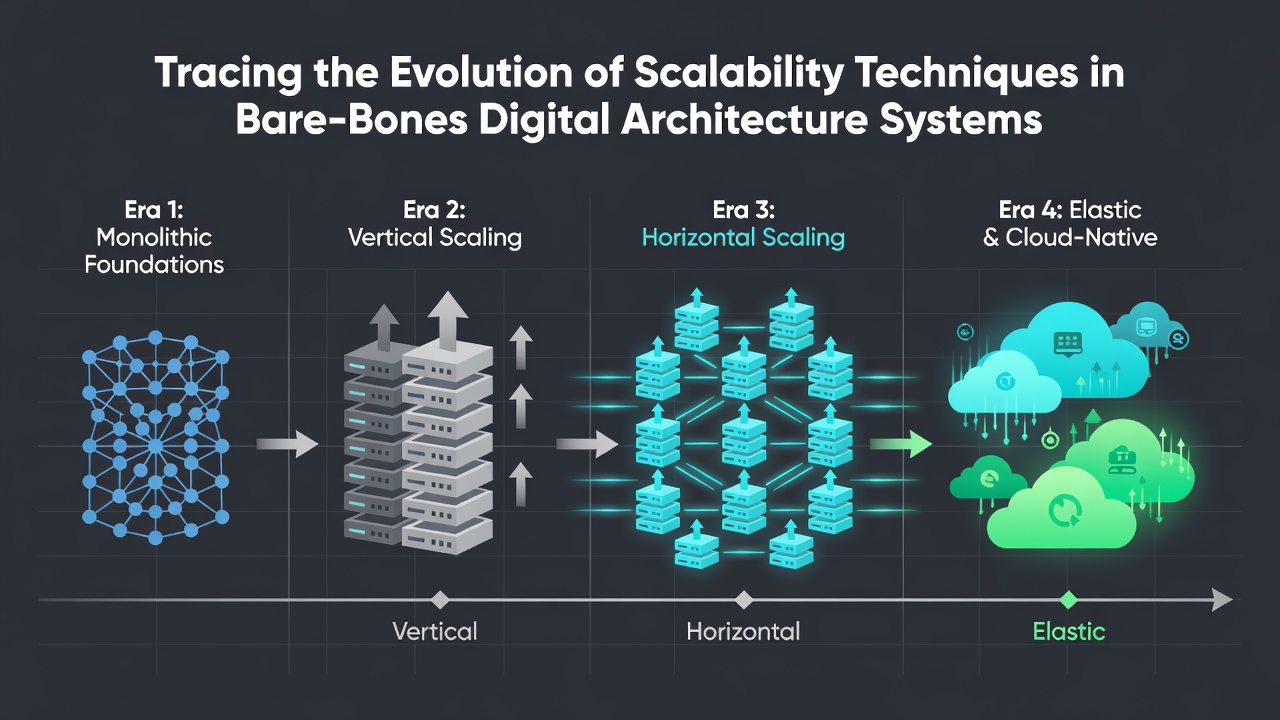
Early digital systems operated under severe hardware constraints where scalability depended on manual hardware upgrades and basic load distribution methods, yet developers soon recognized that minimalist designs could stretch limited resources further when paired with efficient algorithms. Researchers documented these approaches in the 1970s and 1980s as organizations moved from single-machine setups to networked clusters that shared processing tasks across multiple nodes.
Initial Approaches in Constrained Environments
Systems from that era used simple partitioning techniques, and data showed that batch processing allowed machines to handle growing workloads without immediate hardware expansion. Observers note that bare-bones architectures avoided unnecessary layers of abstraction, which kept overhead low while still permitting incremental scaling through added storage drives or memory modules. According to reports from the National Institute of Standards and Technology, these methods laid groundwork for later virtualization efforts that abstracted physical resources into reusable pools.
Engineers experimented with early forms of caching and queue management, and case studies from academic institutions revealed measurable improvements in throughput when requests were routed dynamically rather than processed sequentially. Those who've studied this period know that resource contention remained a constant challenge, so techniques focused on prioritizing critical tasks while deferring others until capacity freed up.
Shift Toward Distributed Models
By the 1990s and early 2000s, the rise of internet services pushed bare-bones architectures toward distributed computing patterns, and evidence from industry analyses indicates that replication across multiple servers became standard practice. Developers adopted message-passing interfaces that let independent components communicate without tight coupling, which supported horizontal growth as traffic increased. What's interesting is how these systems maintained minimal footprints by stripping away graphical interfaces and nonessential services in favor of command-line control and automated scripts.
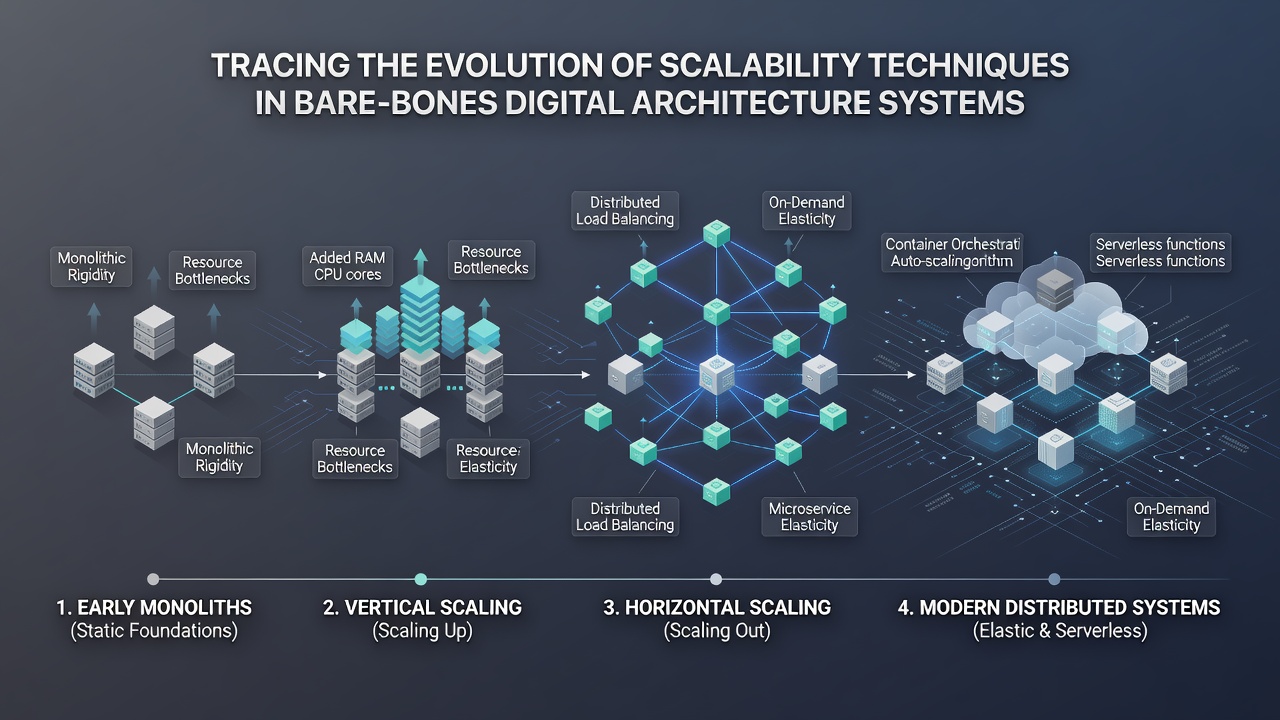
Containerization emerged as a key milestone around 2010, and data from the European Organization for Nuclear Research highlights how lightweight isolation mechanisms allowed multiple applications to share the same kernel while remaining isolated. This approach reduced the need for full virtual machines, cutting memory usage significantly and enabling denser deployments on existing hardware. People who've examined deployment logs from that time often discover that orchestration tools coordinated these containers across clusters, adjusting instance counts automatically based on demand metrics.
Contemporary Techniques and Automation
Current practices incorporate serverless functions and edge computing nodes that extend bare-bones principles into cloud environments, and figures from Canadian government digital infrastructure reviews reveal steady adoption rates among enterprises seeking cost-efficient scaling. Auto-scaling policies now rely on predictive analytics drawn from historical usage patterns, allowing systems to provision additional capacity before bottlenecks form. Experts have observed that these methods preserve the minimalist ethos by eliminating idle resources and billing only for actual consumption.
In September 2026, updates to international standards on cloud interoperability are scheduled to take effect, and preliminary documentation suggests they will standardize metrics for measuring scalability in resource-constrained setups. Organizations already testing these frameworks report smoother migrations between providers, which reduces vendor lock-in risks that previously limited flexibility. Researchers continue to refine consensus algorithms for distributed ledgers that operate efficiently even on low-power devices, extending bare-bones scalability to Internet of Things deployments.
Integration with Emerging Hardware Trends
Recent hardware advancements such as specialized accelerators and persistent memory modules have influenced how bare-bones systems handle peak loads, and studies from Australian research universities demonstrate that combining these components with software-defined networking yields higher efficiency ratios. Observers note that energy consumption metrics have become central to scalability evaluations because power constraints often define the practical limits of expansion in remote or mobile installations.
Security considerations have also evolved alongside these techniques, with zero-trust models adapted for minimalist stacks that avoid heavy encryption overhead. Data indicates that selective encryption applied only to sensitive pathways maintains performance while meeting compliance requirements across regions. Those tracking adoption patterns see continued interest in open-source toolkits that let teams customize scaling logic without proprietary dependencies.
Conclusion
The progression of scalability methods in bare-bones digital architecture systems reflects ongoing adaptation to hardware limits and workload demands, and records from multiple decades show consistent emphasis on reducing overhead while increasing capacity. Future developments will likely build on current automation trends, incorporating feedback from real-world deployments to refine resource allocation further. Organizations that maintain focus on these principles continue to achieve reliable growth even when starting from minimal baselines.